Showing posts with label research. Show all posts

Monday, March 2, 2009

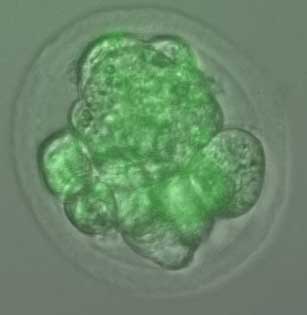
Scientists have developed safer way to alternative to embryonic stem cells


Scientists have developed what appears to be a safer way to create a promising alternative to embryonic stem cells, boosting hopes that such cells could sidestep the moral and political quagmire that has hindered the development of a new generation of cures.

The researchers produced the cells by using strands of genetic material, instead of potentially dangerous genetically engineered viruses, to coax skin cells into a state that appears biologically identical to embryonic stem cells.

"It's a leap forward in the safe application of these cells," said Andras Nagy of Mount Sinai Hospital in Toronto, who helped lead the international team of researchers that described the work in two papers being published online today by the journal Nature. "We expect this to have a massive impact on this field."

In addition to the scientific implications, the work comes at a politically sensitive moment. Scientists are anxiously waiting for President Obama to follow through on his promise to lift restrictions on federal funding for research on human embryonic stem cells. Critics of such a move immediately pointed to the work as the latest evidence that the alternative cells make such research unnecessary.

"Stem cell research that requires destroying embryos is going the way of the Model T," Richard M. Doerflinger of the U.S. Conference of Catholic Bishops said. "No administration that values science and medical progress over politics will want to divert funds now toward that increasingly obsolete and needlessly divisive approach."

Scientists, however, while praising the work as a potentially important advance, said it remains crucial to work on both types of cells because it is far from clear which will turn out to be more useful.

"The point is, we don't know yet what the end potential of either of these approaches will be," said Mark A. Kay of Stanford University. "No one has cured any disease in people with any of these approaches yet. We don't know enough yet to know which approach will be better."

Because embryonic stem cells are believed capable of becoming any kind of tissue in the body, scientists believe they could eventually lead to treatments or even cures for a host of ailments, including heart disease, diabetes, and Alzheimer's and Parkinson's diseases. In 2001, President George W. Bush restricted federal funding for human embryonic stem cell research to prevent taxpayer money from encouraging the destruction of human embryos, which is necessary to obtain the cells.

The alternative cells, known as induced pluripotent stem cells, or iPS cells, appear to have many of the same characteristics as embryonic stem cells but are produced by activating genes in adult cells to "reprogram" them into a more primitive state, bypassing the moral, political and ethical issues surrounding embryonic cells. Until now, however, their use has been limited because the genetic manipulation required the use of viruses, raising concerns the cells could cause cancer if placed in a patient. That has triggered a race to develop alternative approaches.

"These viral insertions are quite dangerous," Nagy said.

In the new work, Nagy and his colleagues in Toronto and at the University of Edinburgh in Scotland instead used a sequence of DNA known as a transposon, which can insert itself into the genetic machinery of a cell. In this case, the researchers used a transposon called "piggyBac" to carry four genes that can transform mouse and human embryonic skin cells into iPS cells. After the conversion took place, the researchers removed the added DNA from the transformed cells using a specific enzyme.

"PiggyBac carries the four genes into the cells and reprograms the cells into stem cells. After they have reprogrammed the cells, they are no longer required, and in fact they are dangerous," Nagy said. "After they do their job they can be removed seamlessly, with no trace left behind. The ability for seamless removal opens up a huge possibility."
A series of tests showed that the transformed cells had many of the properties of embryonic stem cells, Nagy said.

The researchers did their initial work on skin cells from embryos but say the approach should work just as efficiently in adult cells, and they plan to start those experiments.

"We do not expect that adult cells would behave significantly differently than the ones we are using currently," Nagy said.

In addition to producing safer cell lines that would be less likely to cause cancer in patients, the advance will enable many more scientists to begin working on such cells because they require no expertise or special laboratories necessary for working with viruses, he said.

"This opens up the possibility of working in this field for laboratories that don't have viral labs attached to them. A much larger number of laboratories will be able to push this field forward," Nagy said.

Other researchers praised the work.

"It's very significant," said George Q. Daley, a stem cell researcher at Children's Hospital in Boston. "I think it's a major step forward in realizing the value of these cells for medical research."

"It's very exciting work," agreed Robert Lanza, a stem cell researcher at Advanced Cell Technology in Worcester, Mass. "With the new work, we're only a hair's breadth away from the biggest prize in regenerative medicine -- a way to create patient-specific cells that are safe enough to use clinically."

Kay agreed that the work is promising but cautioned that much more research will be needed to prove that cells produced this way are safe. Many scientists are working on other approaches that may turn out to be safer and more efficient, he said.

"This is a step forward. The research is heading in the right direction. But there still may be room for improvement," he said.

more...
New Method For Creating Stem Cells
Mount Sinai Hospital's Dr. Andras Nagy discovered a new method of creating stem cells that could lead to possible cures for devastating diseases including spinal cord injury, macular degeneration, diabetes and Parkinson's disease. The study, published by Nature, accelerates stem cell technology and provides a road map for new clinical approaches to regenerative medicine.

Wednesday, February 4, 2009

silicon chips used to repair damaged tissue in the human body.

Computer chips may 'revamp nerve

Researchers have enthused closer to creation silicon chips which could one day be used to fix damaged tissue in the human body.


Edinburgh University has developed a technique, which allows neurons to grow in fine, detailed patterns on the surface of tiny computer chips.


Neurons are the basic cells of the human nervous system.
The scientists said the development may eventually enable chips to replace damaged nerve or muscle fibres.
They also said the development could possibly be used in the development of prosthetics in the future.
During the chip manufacturing process, the scientists printed patterns on the smooth silicon surface.


The chip was then dipped in a patented mixture of proteins, and neurons grew along the patterns on the surface.
The technique also works with stem cells.
It is hoped the method will eventually enable any type of tissue to be grown on a tailor-made pathway and implanted as prosthetic tissue in the body.
Professor Alan Murray, head of Edinburgh University's School of Engineering and Electronics, who led the research, said: "This is a small but important step on the path towards the long-term goal of many scientists and medical experts - to develop surgical implants using silicon chips.
"We can now make silicon chips with circuitry as well as pathways where cells can grow in the body.
"One of the areas this could be used in is prosthetics - if we can cause cells from damaged tissues to grow where we want.
"It is going towards the realms of science fiction - there is a definite Incredible Hulk feel about it."
He added: "We also hope that, rather sooner than this, the technique will allow better methods of drug discovery and reduce the need for animal testing, as new medicines could be tested on chips rather than in live creatures."
The research was funded by the Engineering and Physical Sciences Research Council.

Tuesday, February 3, 2009

Victory of MS stem-cell treatment

Stem cells are showing more and more potential in the treatment of MS and the challenge we now face is proving their effectiveness in trials involving large numbers of people.
Not one of 21 adults with relapsing-remitting MS who had stem cells transplanted from their own bone marrow deteriorated over three years.
And 81% improved by at least one point on a scale of neurological disability, The Lancet Neurology reported.
Further tests are now planned, and a UK expert called the work "encouraging".
MS is an autoimmune disease which affects about 85,000 people in the UK.
It is caused by a defect in the body's immune system, which turns in on itself, causing damage to the nerves which can lead to symptoms including blurred vision, loss of balance and paralysis.

At first, the condition mostly causes intermittent symptoms that are partly reversible.
Over a 10-15 year period after onset, most patients develop secondary-progressive MS, with gradual but irreversible neurological impairment.
It is not the first time this treatment - known as autologous non-myeloablative haemopoietic stem-cell transplantation - has been tried in people with MS, but there has not been a great deal of success.
The researchers at Northwestern University School of Medicine in Chicago said most other studies had tried the transplants in people with secondary-progressive MS where the damage had already been done.
In the latest trial patients with earlier stage disease who, despite treatment had had two relapses in the past year, were offered the transplant.
Immune system
Stem cells were harvested from the patients and frozen while drugs were given to remove the immune cells or lymphocytes causing the damage.
The stem cells were then transplanted back to replenish the immune system - effectively resetting it.
Five patients in the study relapsed, but went into remission after receiving other therapy.
The researchers are now doing a randomised controlled trial in a larger number of patients to compare the treatment with standard therapy.
Study leader Professor Richard Burt said this was the first MS study of any treatment to show reversal of damage.
"You don't want to wait until the horse has left the barn before you close the barn door - you want to treat early.
"I think the reversal is the brain repairing itself.
"Once you're at the progressive stage you have exceeded the ability of the brain to repair itself," he said.
However, he cautioned that it was important to wait for the results of the larger trial.
And that he would not call it a cure but "changing the natural history of the disease".
Dr Doug Brown, research manager at the MS Society, said the results were very encouraging.
"It's exciting to see that in this trial not only is progression of disability halted, but damage appears to be reversed.
"Stem cells are showing more and more potential in the treatment of MS and the challenge we now face is proving their effectiveness in trials involving large numbers of people."

Tuesday, January 27, 2009

UCLA researchers have reprogrammed human induced pluripotent stem cells

For the first time, UCLA researchers have reprogrammed human induced pluripotent stem (iPS) cells into the cells that finally become eggs and sperm, possibly opening the door for new treatments for sterility using patient-specific cel
The iPS cells were coaxed into forming germ line precursor cells which include genetic material that may be passed on to a child. The study appears today in the early online edition of the peer-reviewed journal Stem Cells.
“This finding could be important for people who are rendered infertile through disease or injury. We may, one day, be able to replace the germ cells that are lost,” said Amander Clark, a Broad Stem Cell Research Center scientist and senior author of the study. “And these germ cells would be specific and genetically related to that patient.”
Theoretically, an infertile patient’s skin cells, for example, could be taken and reprogrammed into iPS cells, which, like embryonic stem cells, have the ability to become every cell type in the human body. Those cells could then be transformed into germ line precursor cells that would eventually become eggs and sperm. Clark cautioned, however, that scientists are still many years from using these cells in patients to treat infertility. There is still much to be learned about the process of making high quality germ cells in the lab.In another important finding, Clark’s team discovered that the germ line cells generated from human iPS cells were not the same as the germ line cells derived from human embryonic stem cells. Certain vital regulatory processes were not performed correctly in the human iPS derived germ cells, said Clark, an assistant professor of molecular, cell and developmental biology.
So it’s crucial, Clark contends, that work continue on the more controversial human embryonic stem cells that come from donated, excess material from in vitro fertilization that would otherwise be destroyed.
When germ cells are formed, they need to undergo a specific series of biological processes, an essential one being the regulation of imprinted genes. This is required for the germ cells to function correctly. If these processes are not performed the resulting eggs or sperm, are at high risk for not working as they should. This has significant consequences, given that the desired outcome is a healthy child.
“Further research is needed to determine if germ line cells derived from iPS cells, particularly those which have not been created by retroviral integration, have the ability to correctly regulate themselves like the cells derived from human embryonic stem cells do,” Clark said. “When we looked at the germ cells derived from embryonic stem cells, we found that they regulated as expected, whereas those from the iPS cells were not regulated in the same way. We need to do much more work on this to find out why.”
Humanitarian goals, science get new life
PRESIDENT Obama's inauguration has led to the resumption of aid to international groups that perform or give information about abortions and should open the door to important scientific research. Both developments are a boost to humanitarian and medical advances that should expand during the Obama administration.
The new president signed an executive order on Friday that ended the ban on giving taxpayer money to international family groups that offer abortions or provide related information. The assistance was available from the Agency for International Development during the Clinton administration but banned during the Reagan and both Bush administrations.
Obama also is expected to restore funding for the U.N. Population Fund, which George W. Bush had rejected on the contention that it supported a Chinese family planning policy of coercive abortion and involuntary sterilization, an allegation that the agency vehemently denied. In fact, the lifting of the bans will reduce unintended pregnancies, abortions and the deaths of women from high-risk pregnancies.
The signing came a day after the Food and Drug Administration allowed the world's first clinical trial of a treatment derived from human embryonic stem cells for spinal cord injury. The therapy uses an old embryonic stem cell line that was allowed under the latest Bush administration but the approval might have been delayed until Bush left office.
The Bush administration restricted federal financing for embryonic stem cell research because creation of the cells entailed destruction of human embryos, even though they had been destined for the trash. President Obama has pledged to remove some of the financial restrictions.


Research on stem cells is the subject of intense investigation, both from a basic science point of view, as well as a basis for cell-based therapies to treat disease. The ability to study and characterize stem cells has been aided by the identification of specific markers which allow researchers to characterize and enrich these cells. The use of immunophenotyping is an important technique to distinguish one population of cells from another. eBioscience is dedicated to providing you with a choice of innovative primary antibody reagents and flurochromes to accelerate your stem cell research using multicolor flow cytometry.

Friday, December 19, 2008

UGA gets $18.7M -largest medical grant in its history

UGA Research Foundation receives $18.7 million Gates Foundation grant to improve control of schistosomiasis, a debilitating and neglected tropical disease

The University of Georgia Research Foundation has received a five-year, $18.7 million grant from the Bill & Melinda Gates Foundation to research ways to reduce morbidity from schistosomiasis in low- and middle-income countries in Africa, the Middle East and the Americas. Researchers will develop and evaluate research-based approaches and diagnostic tools to identify, control and even eliminate schistosomiasis where feasible
The five-year grant will fund research into ways to reduce morbidity from the disease, which is caused by several species of flatworms. Schistosomiasis can damage internal organs and impair physical and cognitive development in children.

Dan Colley, director of UGA's Center for Tropical and Emerging Global Diseases, is principal investigator for the project, which will provide critical tools and an evidence base for decisions about controlling schistosomiasis. Colley, a microbiologist and immunologist in UGA's Franklin College of Arts and Sciences, has researched the disease for nearly 40 years.


"This grant significantly bolsters the University of Georgia's growing strength in public health and medical research," said UGA President Michael F. Adams. "It holds promise for great progress in eliminating a disease that causes suffering and economic hardship for millions around the world."


This is the largest grant UGA has received from the Gates Foundation, the first for medical research and the third-largest grant in UGA history.


The project grew out of a consensus research agenda developed in 2007 with broad input from the schistosomiasis research and control community. It focuses on operational research, and its overall goal is to answer key strategic questions about controlling schistosomiasis to ensure that future programs operate with increased efficacy, cost-effectiveness and sustainability.


"This grant will support and advance pioneering work on schistosomiasis under the technical guidance of Dan Colley," said UGA Vice-President for Research David Lee. "With his international leadership, this award will make great strides in addressing the widespread, debilitating impact of this infection. The University community is proud of Colley and others at the Center for Tropical and Emerging Global Diseases who work tirelessly to improve health conditions in the developing world."


Secondary goals for the project are to integrate global schistosomiasis control efforts with other programs, monitor the effectiveness of current treatments, develop survey and diagnostic tools and overcome barriers that currently prevent effective control.


Caused by several species of flatworms of the genus Schistosoma, this neglected tropical disease affects some 200 million people worldwide. It is most common in Africa, and to a lesser extent in Asia and South America. It is transmitted through a species of freshwater snails, which become infected through contaminated water and then multiply and release infected worms into the water. The worms enter through the skin as their human hosts wash clothes, swim, or fish.


While it has a relatively low mortality rate, schistosomiasis can damage internal organs and impair physical and cognitive development in children. Symptoms of infection include abdominal pain, cough, diarrhea, fever, fatigue, pulmonary hypertension and often an enlarged liver and spleen. The worms can live in the blood vessels of people for up to 40 years, leading to chronic illness.


"Mass drug control programs in several African countries already use the drug praziquantel to reduce mortality from schistosomiasis and to help stem the suffering," said Dan Colley, principal investigator on the grant and director of UGA's Center for Tropical and Global Emerging Diseases. "And while controlling schistosomiasis is a World Health Organization global priority, most endemic countries still lack adequate control programs, and the sustainability of existing programs is tenuous."


Colley will oversee a management team based at the Center for Tropical and Emerging Global Diseases, University of Georgia, but the consortium will involve partners from around the world. Much of the research will be carried out through subgrants to investigators at several federal, state and private institutions and laboratories and field sites in North America, South America, Europe and Africa.

Thursday, October 25, 2007

Astronauts use robot arm for shuttle safety scan


Astronauts used a robot arm to scan the space shuttle Discovery's heat shield for damage on Wednesday as it headed for a Thursday rendezvous with the International Space Station.

"The mission is right on track ... We look forward to docking tomorrow," mission management chairman John Shannon told a press briefing at the Johnson Space Center in Houston.

The shuttle is due to dock with the ISS at 1233 GMT on Thursday to kick off a 10-day construction mission at the outpost that will feature five spacewalks.

Astronauts spent the morning remotely maneuvering the arm to slowly inspect the shuttle wings and nose in a now mandatory post-launch routine begun after space shuttle Columbia broke apart on its return to Earth in 2003.

The scan with lasers and digital cameras looked for any damage to the heat shield that might have occurred when Discovery hurtled into space from Florida on Tuesday.

Data collected is beamed back to Earth for study by NASA engineers who will scrutinize it over the next few days. Preliminary analysis revealed nothing amiss.

Three suspect panels were given an especially close examination. Engineers using a new X-ray analysis technique warned managers ahead of the launch that three of the wing's 44 carbon-composite panels had tiny cracks in their silicon-carbide coatings.

After a lengthy debate, managers opted to proceed with the launch and assigned teams to monitor the situation.Columbia was doomed by a hole in its wing heat shield from a blow by fuel tank insulation foam that broke loose during takeoff. The damage was not detected and the shuttle was destroyed by the high heat of re-entry into the atmosphere, killing the seven astronauts on board.

Loose tank foam has been a recurring problem on shuttle flights. NASA says the danger cannot be eliminated, but it has taken many steps to reduce it.

Video of Tuesday's liftoff showed several pieces of insulation flying off the tank late in the ascent when debris strikes pose less danger because they occur with less force.

The shuttle is carrying the 24-foot-long Harmony, an Italian-built unit that will be installed on the station and to which Europe's Columbus and Japan's Kibo modules will be attached on space missions starting in December.

The seven-member shuttle crew is led by retired U.S. Air Force Col. Pam Melroy. They will link up with a space station crew led by NASA astronaut Peggy Whitson.

LHC( Large Hadron Collider) :ATLAS 
big wheel triumph


LHC ( Large Hadron Collider)
ATLAS celebrates installing the last of the eight big wheels. These wheels form the end-cap muon spectrometer of the detector.
The ATLAS end-cap muon detectors, the ‘big wheels’, have been compared to many things: flowers, orange halves, clock faces and works of art. But, more importantly, each is an incredible feat of engineering. On Friday last week the team celebrated the completion of the last wheel, and moved into the final stages of installation.

"I must admit that at the end of last year I would not have believed that we would manage to install these eight big wheels essentially on schedule," admitted Peter Jenni, ATLAS spokesperson. The first of the wheels took a long time to install, but the last one took just a couple of weeks. "This is really a great achievement."

The big wheels harbour ATLAS’s middle layer of muon chambers in the forward region and are one of the last large pieces to be installed. Each is 25m across, weighs between 40 and 50 tonnes and contains around 80 precision chambers or 200 trigger chambers. The support structure itself is just one third of the weight of the total wheel.

Because of their sheer size, each wheel had to be made in 12 pieces for the trigger planes and 16 pieces for the precision-measurement planes, or "petals", of aluminium, the last of which was installed on Friday. Each was assembled at CERN using components from all over the world before being fitted together, piece by piece like a jigsaw.

Because of the need for space for the chambers, designing a suitable structure presented a unique challenge, one that project engineers, Raphaël Vuillermet, Dimitar Mladenov and Giancarlo Spigo were happy to take on.

"The detectors themselves have been on drawings for 15 years; everyone knew where they would go but no one knew about the structure," explains Dimitar. "There were chambers everywhere so our design had to build around them and in the small spaces in between them."

The result after 3 years of calculation, design and sleepless nights was a uniquely thin and light structure that is precise to less than a millimetre.

The 100-member collaboration from Israel, Japan, the US, China, Russia, Europe and Pakistan began assembly of components in 2005 and installation in 2006. "Because the pieces are so delicate we had to be careful throughout the whole process," explains Raphaël. "I was very afraid about something happening to the chambers and also to the people, because you are working 30 metres up. But we didn’t have any problems."

The completion of the big wheels is symbolic for ATLAS because, as technical coordinator Marzio Nessi explains, "the big wheels were always seen as something we would do at the end. And now we have done them."

For Dimitar the biggest challenge was the timing. "I feel proud, but not for myself, for everyone. It was the result of hard work. The only thing that we were lucky about was the weather; if there had been a single day of heavy rain we might have been delayed. But Marzio said not to worry and to leave the weather to him, and the weather was great. I don’t know how he did it!"

Now just two smaller scale wheels and the end-wall chambers remain to be installed, and the big wheels have already begun to give read-outs as part of test runs using cosmic ray data that ATLAS performs every six weeks.

With their striking symmetry and aesthetic appeal the big wheels are likely to become icons of the experiment. But to Marzio, all pieces of ATLAS are beautiful. "This piece just happens to be 25m high."

Wednesday, October 3, 2007

The day the space age began


From the beginning we human are curious about all that we dont have or that we cannt.
which starts research . we get success.
Fifty years ago, a 184lb ball called Sputnik became the first man-made object to be launched successfully into orbit. The world was changed for ever. Rupert Cornwell looks back on an achievement that set the tone of geopolitics for a generation .

Exactly 50 years ago today, on 4 October 1957, the Russians launched Sputnik, the first ever artificial satellite to orbit the Earth. It circled our planet in roughly 96 minutes, at an altitude of about 150 miles, travelling at a speed of 18,000mph, crossing the US seven times a day. Inside the sphere of polished aluminium were two radio transmitters, and batteries.

Compared to the devices that orbit the planet now, it was primitive in the extreme. Yet Sputnik was a watershed in history.

Curiously, in the Soviet Union of the time, it didn't seem that big a deal, at least initially. The country's leader Nikita Khrushchev was told of the successful launch while he was attending a meeting of party functionaries in Kiev. He was delighted, but the others only wanted to talk about the need to boost local electricity supplies. Only when pandemonium ensued in the US did Moscow realise the magnitude of its propaganda coup – technological, but in those days above all military.

Satellites, scientists understood, could be important tools for both peace and war. But what struck such dread into Americans, and provided such a strong card for their opponents, was the R-7 rocket which carried Sputnik into space. As Khrushchev's son Sergei – a 22-year-old engineering student at the time of the launch who later worked on the Soviet space programme – stresses today, the top priority of the day was to develop an intercontinental ballistic missile to deter an American nuclear first strike. Security, not space exploration, was the name of the game: "Back then, we lived in the same situation as Iran is in now," Sergei, now an American citizen and a professor at the Ivy League Brown University in Rhode Island, said this week.

With the R-7 the Soviets had achieved their goal – or so it seemed to a panicked US.

News of Sputnik came as a bombshell – rating one of those across-the-front-page, triple deck headlines that The New York Times reserves for presidential election results and events like 9/11. Ordinary Americans were stunned, caught napping as they luxuriated in their consumer comforts of cars with shiny chrome tail fins and fancy safety razors. The post-war generation had never had it so good. Now, it appeared, the country faced a threat to its very survival as a free nation.

President Dwight Eisenhower himself reacted with restraint, refusing to overdramatise events – indeed, he is said to have put in five rounds of golf in the week after Sputnik was launched – but he was about the only one. With his blue-chip military reputation, Ike could get away with so measured a response, albeit barely. Today, in the pantheon of presidents, Eisenhower stands higher than he ever has. But for decades afterwards, the Sputnik shock seemed to mark him as old, complacent and out-of-touch. His Democratic opponents were merciless. Lyndon Johnson, the then Senate majority leader, conjured up a science fiction nightmare of giant Soviet platforms in space from which they would rain down bombs on America "like kids dropping rocks on to cars from freeway overpasses".

As the Iraq war shows, hysterical over-reaction to threats is a constant of US history. But at the time few considered it an over-reaction to build fall-out shelters across the land, and drill schoolchildren on how to shelter under their classroom desks in the event of nuclear attack.

A couple of months after Sputnik, hysteria merged with outright national humiliation, when the Vanguard rocket supposed to put America's first satellite into space blew up on the launch pad, live on television, having climbed just four feet into the air. The occasion proved that Pentagon spin was as brazen then as it is now. A military spokesman denied an explosion had taken place. What the world had watched, he said, was "rapid burning".

Eventually, in February 1958, the US did successfully launch its first satellite, Explorer-1. By then, however, the Russians had already put an animate object, in the shape of a terrier called Laika, into space in a much larger Sputnik 2. The unfortunate animal is believed to have died of stress and overheating a few hours into her flight, but the headlines paid scant attention to that. "Soviets Orbit Second Artificial Moon: Communist Dog in Space," read one typical specimen.

Even more profound was the political impact. The Democrats made hay of Ike fiddling (or more exactly perfecting his short game) as Washington burnt.

In the popular mythology, America had stood by watching, mesmerised by shallow consumerism, as the Reds vaulted into tomorrow.

In truth, Sputnik was something of a bluff. The R-7 rocket was too big and too expensive to manufacture in any number, nor did the Russians then have the technology to guide an ICBM to its destination. Sputnik, too, was a bluff. The missile, Nikita Khrushchev privately acknowledged, "was only a symbolic counterthreat to the United States". Not until the 1960s, his son would later reveal, did Moscow acquire its first operational ICBMs. But at the time no one knew this – or, to be precise, no one could say so.

The legend of the "missile gap" was born, and may have proved crucial to John F Kennedy's defeat of Richard Nixon in the 1960 presidential election, as he hammered on about how the Eisenhower-Nixon team had allowed the Soviet Union to achieve strategic superiority. It was not so, as Eisenhower had known well for years, thanks to secret U-2 spy plane flights at altitudes Soviet air defences were unable to reach.

Indeed, the Sputnik programme was partly conceived as a riposte to the U-2.

But for Eisenhower to have given proof that the Democrats' claim was false, he would have had to admit the U-2's existence (which did of course become public knowledge in 1960, when the Soviets finally managed to shoot down the one flown by Gary Powers). Thus did Sputnik usher in the most dangerous phase of the Cold War, which culminated in the Cuban missile crisis of October 1962 – after which both countries in effect decided "never again", installing a hotline between their two capitals, and accepting the doctrine of Mad (or mutually assured destruction).

Five decades on, it is even clearer that while the first Soviet satellite most certainly changed the world, it was not in the way expected at the time. Yes, the R-7's legacy persists, in the land- and submarine-launched ICBMs that are the basis of both sides' strategic nuclear weapons: lodged in Trident submarines silently patrolling the oceans, and the missile silos that look like unmanned power grid relay units, eerily dotted across the empty plains of North Dakota.

True, too, Sputnik might be seen as the first step towards a future militarisation of space, where one day lethal weapons may be dropped down on Earth, as LBJ so colourfully imagined. But the SDI "Star Wars" programme announced by Ronald Reagan has shrunk to an uncompleted missile defence system that causes diplomatic ructions with Moscow, is of uncertain reliability, and is of dubious strategic value.

If Sputnik was a poor guide to the military future, the giddy expectations it stirred of man's presence in space have not been met either. At the time, it seemed to prove that science fiction's claims were not fiction at all. Moreover, Nasa was set up within a few months, under intense public pressure.

In retrospect, however, the July 1969 Moon landing remains the defining moment of space exploration. The US had responded to Sputnik and showed that with its mind on the job, it was more than a technological match for the Soviet Union. But the wilder fantasies spawned by Sputnik, of human voyages to the planets and colonies in space, are little more plausible now than then.

In 2004, President George Bush set out a new vision for Nasa, vowing to complete the international space station and to establish a permanent base on the Moon by 2020, from which "human beings are headed for the cosmos". But the plans have struck no public chord. The foreseeable future extends no further than unmanned missions within our own solar system.

In short, the era that Sputnik inaugurated has been not outward-looking, but introspective, focused not on the great dark blue yonder of the universe, but on the needs and problems of our own troubled and fragile planet. Since Sputnik, 6,000-plus satellites have been put into space. Today there are perhaps 900 up there functioning, some monitoring the environment, and at least half of them for communications purposes, both civilian and military.

This is not the "Space Age" that Sputnik was meant to usher in, but an "Information Age" powered by satellites which has led to a new industrial revolution. Yet, paradoxically, it may be of greater military relevance than ever – not to annihilate an enemy power, but in the more subtle defeat of today's terrorist foes. Not with intercontinental missiles, but by intercepting their phone calls and spying on their activities from space – courtesy, ultimately, of Sputnik.

Russian science: What the scientists say


24hoursnews

:ATTITUDES OF RUSSIAN SCIENTISTS TO FOREIGN SUPPORT
SOURCE. Iurevich and Tsapenko (as item 2), pp. 54-69 (chapter written together with I. Dezhina)

While only a small minority of Russian scientists receive support from abroad, (1) most have sought such support at one time or another. Almost every scientific collective, the authors remark, now has its "experts on foundations" who bombard potential foreign sponsors with appeals for money.

To explore the attitudes of Russian scientists to foreign support, the Central Institute for the Study of Public Opinion (TsIOM) surveyed 250 natural and social scientists from the main regional scientific centers, including Moscow, St. Petersburg, Novosibirsk, Tomsk, Saratov, and Chelyabinsk. (2)

(a) Benefits and drawbacks of foreign support

"With regard to the general influence of foreign support on Russian science, moderately positive assessments predominate." Thus 13 percent of respondents consider foreign support of Russian science absolutely essential; two-thirds think it useful but not essential; and 13 percent regard it as humiliating or harmful.

In what ways does foreign support benefit Russian science and Russian scientists?

* In the view of 49 percent of respondents, foreign support increases the QUANTITY of scientific output.

* In the view of 35 percent of respondents, foreign support improves the QUALITY of scientific output.

* In the view of 52 percent of respondents, foreign support facilitates the creation of new scientific research programs.

* In the view of 62 percent of respondents, foreign support makes its recipients more independent of the directors of their institutes.

* In the view of 37 percent of respondents, foreign support revives the interest of Russian scientists in such traditional attributes of a scientific career as the publication of articles and monographs and the acquisition of academic degrees, inasmuch as these increase one's chance of getting a grant.

* In the view of 60 percent of respondents, grants from foreign foundations are a very substantial supplement to the income of Russian scientists (typically $100-200 per month). However, 65 percent of respondents note that grants are not large enough to cover trips abroad or the purchase of new equipment. They get "eaten up" by their recipients without changing the situation of Russian science as a whole. The system is "oriented toward growing vegetables not fruit trees."

* Many respondents also stress the moral dimension of foreign support, which makes the beneficiaries feel that they are a part of world science and that at least someone values their work.

The two most commonly mentioned negative effects of foreign support are:

* that -- in the opinion of 43 percent of respondents -- it undermines good relations among scientists by sowing divisions between the envied recipients of grants and their less fortunate colleagues, and

* that the hunt for grants takes up a large part of scientists' time, distracting them from their research.

The authors note some differences in the attitudes expressed by various categories of respondents:

* Men tend to be more skeptical about the benefits of foreign support than women are.

* Older and senior scientists, especially institute directors, tend to be more skeptical than their junior colleagues.

* Natural scientists, who are unable even with foreign support to buy the equipment they need, feel that social scientists receive a disproportionate share of the available funds.

* Contrary to expectations, no significant difference was found between the views of scientists who received foreign support and the views of scientists who did not.

(b) Attitudes to different forms of foreign support

The basic form of foreign support is the award of individual (or less often collective) grants on a competitive basis. Most respondents -- 86 percent -- approve of this practice. But a number of criticisms were also frequently voiced:

* Some grants should be awarded on the basis of nomination.

* More joint research projects with foreign collaborators should be funded.

* Some areas of science that are seen as politically relevant get disproportionate support at the expense of other less politicized but no less important areas.

* More support should be given to new scientific directions and open-ended exploratory research.

(c) Motives attributed to foreign sponsors

Only 12 percent attribute purely altruistic motives to foreign sponsors, seeing them as "Santa Claus," while 40 percent believe they "are trying to buy up our ideas on the cheap" and 14 percent suggest that their goal is to protect Western scientists from competition by stemming the emigration of Russian scientists. Only a few attribute to foreign sponsors the motive of preventing Russian scientists from working for "rogue states" like Iran and Iraq or long-term strategic motives like turning Russia into a "civilized neighbor" of the West.

16 percent suspect that Western secret services may be involved in foreign funding of Russian science, but they do not regard this as such a terrible thing. Some argue that the West has an interest not in undermining but in stabilizing the Russian state.

(d) Perceptions of foreign foundations

Although most Russian scientists are interested in obtaining foreign support for their work, they are poorly informed about foreign foundations. Few respondents were able to name more than two or three foreign foundations. (3) By far the best known and most highly regarded is the Soros Foundation, which is mentioned by 83 percent of respondents. The Ford and MacArthur Foundations are quite widely known. German and other non-American foreign foundations are rarely mentioned.

Only 35 percent of respondents think that they have an adequate understanding of the mechanism by which grants are allocated; 54 percent say they have a vague idea, and 7 percent admit that they have no idea whatsoever. Many confess that they find the allocation of grants by the MacArthur Foundation in particular "a complete enigma." This ignorance, the authors comment, is "fertile ground for the circulation of all sorts of rumors and the attribution to foreign foundations of dubious aims."

What, in the opinion of respondents, are the main factors influencing a scientist's chances of obtaining a grant?

* the personal connections of applicants (68 percent)

* their skill in writing applications (55 percent)

* their objective scientific achievements (29 percent)

* their formal status, i.e. post occupied and academic degree (27 percent)

* their informal authority (22 percent)

The majority of respondents see the process by which grants are awarded as subjective, chaotic, and corrupt. Here are some typical statements:

-- "The main thing here is the administrative apparatus of distribution, which keeps part of the money for itself."

-- "This sphere is quite corrupt."

-- "Our grant bureaucrats have concentrated in their hands power that Soviet bureaucrats never dreamed of."

-- "I do not exactly know this mechanism, but I have the a priori opinion that it's a mafia grouping."

Resentment is directed especially at the many employees of foreign foundations who are Russian emigres or people from specific politicized institutions such as the Institute for the Study of the USA and Canada. Respondents say that the emigres left Russia a long time ago and have a poor knowledge of the contemporary state of Russian science.

Thus the appreciation that respondents feel for the support offered by foreign foundations is marred by their acute dissatisfaction with the way that the foundations operate.

NOTES

(1) The authors' estimate is 4 percent, but it is not clear whether this refers to all those who have ever received foreign support or to those receiving such support at a particular moment in time. "Scientist" is used in the broad sense of the Russian "uchenyi" to include not only natural and social scientists but also scholars in the humanities.

(2) Of the 250, 200 completed questionnaires while 50 were interviewed in depth. The time of the survey is not specified, but appears to have been some time in the early 1990s.

(3) Curiously, some respondents thought that purely Russian foundations such as the Russian Foundation for Fundamental Research were foreign foundations. Perhaps they were not aware that Russian foundations actually exist.

Monday, September 17, 2007

Most intriguing extrasolar planets


The first planets outside our solar system were spotted in 1990, in orbit around a dying, radiation-spewing star very different from our Sun. In the years since, scientists have turned up even stranger worlds.

Starting in 1995 with 51 Pegasi b - the first extrasolar (or exoplanet) discovered around a normal star - planet hunters have found alien worlds that run the gamut in terms of diversity. There are large, gassy giants and small and rocky worlds. Some are two-faced worlds of fire and ice, and some float eerily through space, bound to no star.

In the dozen years since the discovery of 51 Pegasi b, the number of known and suspected exoplanets has climbed to nearly 230. Here are some record holders and oddballs.
The first


The closest


51 Pegasi b was the first planet discovered in orbit around a normal star other than our Sun. The planet, a hot Jupiter, also goes by the moniker Bellerphon, after the Greek hero who tamed winged-horse Pegasus, in reference to the constellation Pegasus where the planet is located.
Epsilon Eridani b orbits an orange Sun-like star only 10.5 light years away from Earth. It is so close to us telescopes might soon be able to photograph it. It orbits too far away from its star to support liquid water or life as we know it, but scientists predict there are other stars in the system that might be good candidates for alien life.


Free floaters

There are known exoplanets that have one, two and even three suns. But one bizarre class of planet-sized objects has no suns at all, and instead floats untethered through space. Called planemos, the objects are similar to, but smaller than, brown dwarfs, failed stars too small to achieve stellar ignition

A zippy planet


SWEEPS-10 orbits its parent star from a distance of only 740,000 miles, so close that one year on the planet happens every 10 hours. The exoplanet belongs to a new class of zippy exoplanets called ultra-short-period planets (USPPs), which have orbits of less than a day.